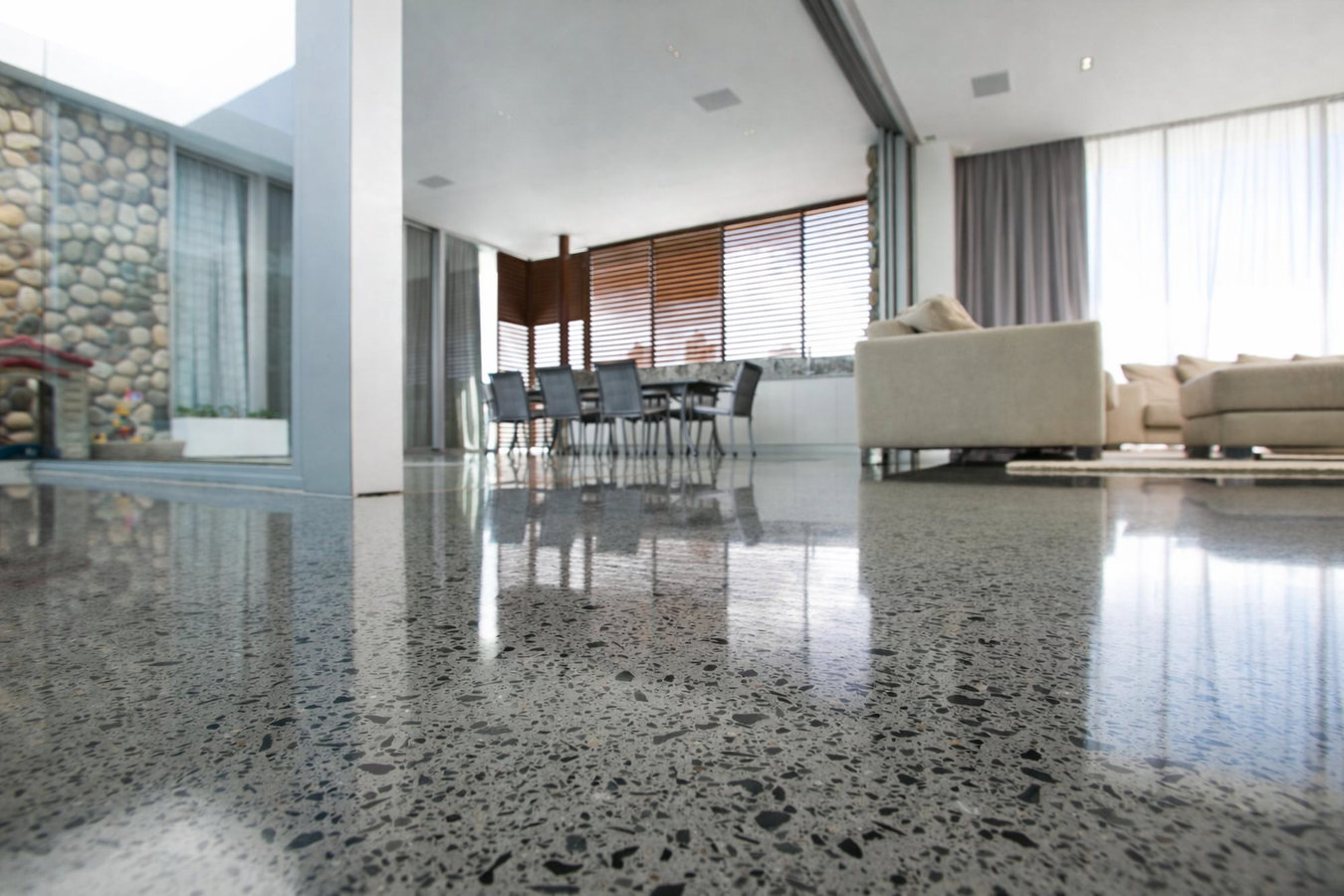
Cracked slabs, flaking surfaces, and floors that were never thick enough for the load you put on them - we replace and install concrete floors built for Hobbs conditions.
Concrete floor installation in Hobbs starts with ground preparation - leveling, compacting, and addressing the caliche layer common in Lea County - then forming, pouring, finishing, and sealing. Most residential projects take one to two days of active work, with a curing period of at least a week before heavy use.
In Hobbs, a lot of older homes have garage and utility floors that were poured decades ago for lighter vehicles and different uses. Oil field work, heavier trucks, and equipment trailers put real stress on a slab that was not sized for them. If you are dealing with a floor that keeps cracking or a space you are converting for a new purpose, a proper replacement makes more sense than patching a bad foundation. For spaces that connect to an outdoor area, concrete pool decks follow the same soil-first process we use for interior slabs.
A free site visit takes about 30 minutes and gives you a written estimate that covers everything - prep, pour, finishing, and sealing - before any commitment is made.
If you have patched the same crack more than once and it keeps reopening, the problem is not the patch - it is the slab underneath. In Hobbs, this is often caused by the caliche soil shifting after a rain event or a water line leak. Patching alone will not fix it - a new floor with proper base preparation addresses the root cause.
When the top layer starts to peel off in flakes or feels soft and dusty underfoot, the surface has broken down. This is especially common in Hobbs garages poured without a sealer and exposed to years of intense UV and heat. Once the surface starts deteriorating this way, no amount of patching will restore it - replacement is the practical answer.
If you have started parking a heavier truck, a work trailer, or equipment on a slab originally poured for a standard passenger car, new cracks near the edges are a warning sign. Many older Hobbs homes were built with thinner garage slabs that were not designed for the heavier vehicles common in an oil field community. A new floor poured to the right thickness will hold up far better.
A floor that holds standing water after mopping or a rain blowback through the garage door is either not level or was poured without adequate slope toward a drain. Standing water accelerates surface damage and creates a slip hazard. If water sits in low spots regularly, the floor slope is wrong and cannot be corrected without replacement.
We install concrete floors for garages, interior rooms, workshops, utility spaces, and room additions throughout Hobbs and Lea County. Every project includes a soil assessment before the first form is set - checking for caliche, evaluating drainage, and determining the right thickness and reinforcement for how the floor will actually be used. For homeowners who also need outdoor concrete work, garage floor concrete focuses specifically on vehicle-rated slabs with the oil-resistant sealing options common in Permian Basin households.
Every floor we pour includes control joints cut at the right intervals so if the concrete does shift slightly during curing, it cracks predictably along those lines rather than randomly across the surface. We seal every floor before we leave, and we tell you exactly which sealer was used and when it will need to be reapplied.
Suits homeowners who need a vehicle-rated slab sized for the actual weight and frequency of use in their garage or work bay.
Suits homeowners converting unfinished spaces - utility rooms, additions, or basement areas - where the existing ground needs a proper floor first.
Suits homeowners who want a smooth-polished, stained, or stamped finish that looks intentional rather than industrial, for living spaces or showroom areas.
Suits homeowners with an existing floor that is cracked, settled, or no longer adequate for current use and needs a proper tear-out and re-pour.
Hobbs sits in the Chihuahuan Desert with summer temperatures regularly above 100 degrees. Concrete poured in that heat dries on the surface before the inside has time to cure, which leads to surface cracking and a weaker floor overall. Experienced Hobbs contractors schedule pours for early morning, use additives that slow the setting process, and keep the fresh concrete moist during curing. That is not optional in this climate - it is the difference between a floor that lasts and one that shows problems in the first year.
The caliche layer under most of Hobbs also changes how base preparation works. Contractors unfamiliar with Lea County soil skip this step or rush it, and homeowners end up with floors that crack when the ground shifts after rain. We also work in Artesia and Roswell where similar caliche and desert heat conditions apply - and we bring the same soil-first preparation to every project in those areas.
We respond within one business day. Have a rough sense of the space size and how the floor will be used - that helps us ask the right questions and bring the right equipment to the site visit.
We measure the area, check the soil conditions including caliche depth, and look at drainage and grading. We also ask about your vehicle load and use case so we can size the slab thickness correctly. You get a written estimate covering prep, pour, finishing, and sealing with no open-ended line items.
We clear and prep the base, set forms and reinforcement, then pour and finish the concrete. In Hobbs summers, we schedule the pour for early morning. You will need to clear the area of vehicles and stored items before the crew arrives.
The floor needs at least 24 to 48 hours before foot traffic and longer before heavy loads. We apply sealer and walk you through the finished floor before we leave - pointing out control joints, explaining the sealer type, and confirming when the floor is ready for full use.
Free on-site assessment. We check the soil before we price the job. No surprise costs.
(575) 665-9620We assess the caliche layer and ground conditions at every site visit - not after the forms are set. That means the base is right before a drop of concrete is poured, and you do not end up with a floor that starts shifting the first time the ground gets wet.
We schedule pours for early morning during Hobbs summers, use admixtures that slow the setting process, and keep fresh concrete moist during curing. The American Concrete Institute outlines hot-weather concreting standards we follow to protect the floor during the most vulnerable window.
Hobbs households regularly park heavy trucks, trailers, and work equipment on garage floors. We ask what you are parking before we size the slab, and we pour to the thickness your actual load requires - not a one-size standard that looks fine until you park on it.
Hobbs Concrete holds a valid New Mexico Construction Industries Division license. Out-of-state crews from West Texas sometimes work in Hobbs without one. We also handle any City of Hobbs permits required for your project - you do not need to navigate that process yourself.
The combination of local soil knowledge, heat-aware scheduling, load-appropriate sizing, and proper licensing is what separates a floor that lasts from one that needs to be replaced in five years. Every floor we install is built for Hobbs specifically, not adapted from a generic process that ignores desert conditions.
Extend your outdoor living space with a pool deck poured to match the same soil prep and heat management standards as your interior slab.
Learn MorePurpose-built garage slabs with vehicle-rated thickness, oil-resistant sealing, and proper slope toward the drain for Hobbs households.
Learn MoreSummer books fast in Hobbs - lock in your pour date now so we can time it for the coolest part of the day.