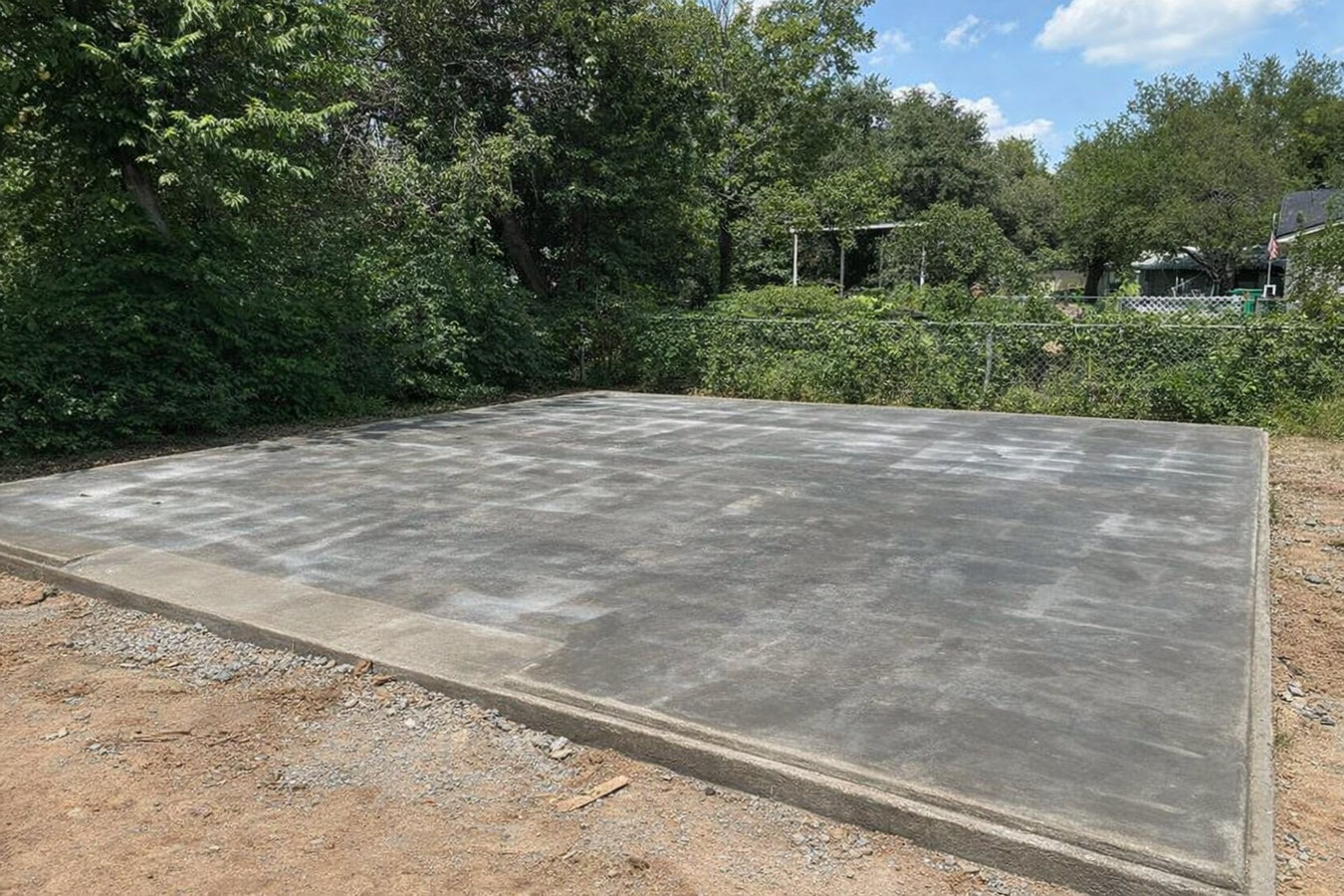
Building on Hobbs soil takes more than just pouring concrete. We assess the caliche and clay conditions on your lot, install proper reinforcement and a moisture barrier, and handle every city permit and inspection before a single truck rolls in.
Slab foundation building in Hobbs, NM involves grading and compacting the lot, installing gravel drainage, laying steel reinforcement, placing a full-footprint moisture barrier, and pouring a single thick concrete pad that becomes both the floor and structural base of your home. Most residential slab projects complete the concrete work in one to three days, with the full process from site prep to a cured slab ready for framing taking one to two weeks.
If you are building a new home, garage, or addition in Hobbs, a poured concrete slab is almost certainly what your builder will specify - it is the standard approach for new residential construction across southeastern New Mexico. The clay and caliche soil common in Lea County makes proper base preparation critical. A slab that was not designed for local soil conditions will crack and shift within a few years, long before it should. When your project also requires structural support around the perimeter, concrete footings can be built at the same time to strengthen the edges where walls will carry the most load.
Every inquiry gets a response within one business day. A site visit takes 30 to 60 minutes and produces a written estimate with every cost itemized - gravel base, moisture barrier, reinforcement, pour, and permit fees - before any ground is broken.
The most straightforward sign is simply having a lot or cleared area where a structure needs to go. If you are building a new home, garage, workshop, or room addition in Hobbs, a poured concrete slab is the foundation your builder or architect will specify. This is the standard approach for new residential construction across southeastern New Mexico.
Small hairline cracks in a concrete floor are normal and usually harmless. But if you can fit a pencil tip into a crack, or if cracks run diagonally from the corners of doorways or windows, the slab may be shifting. In Hobbs, this kind of movement is often tied to the clay and caliche soil layers that expand and contract with moisture changes - and a section of foundation may need to be rebuilt.
When a slab foundation shifts, the walls above it shift too, and the first place you notice it is in doors and windows that suddenly stick, drag, or leave gaps at the corners. If this is happening in multiple places at once, it is worth having a foundation contractor assess the slab. In Hobbs, this symptom often appears after a wet period followed by a dry stretch, when the soil has gone through a shrink-and-swell cycle.
If a gap is opening up between your floor and the wall at the base of a room - especially if it is growing over time - the slab may be settling unevenly. This is different from normal house settling and is worth taking seriously, particularly in older Hobbs neighborhoods where original slabs may not have been built to current standards.
We build new concrete slab foundations for homes, garages, workshops, and additions throughout Hobbs and Lea County. Every project starts with a site visit - we assess the soil, evaluate drainage, confirm the lot dimensions, and design the slab thickness and reinforcement layout based on what your specific ground requires. Base preparation is not a shortcut we take: we grade and compact the subgrade, bring in a gravel drainage layer, install steel reinforcement in a grid across the entire area, and lay a full-footprint vapor barrier before a single yard of concrete is ordered. For projects that need structural support beyond the slab itself, foundation installation covers the broader scope of work including thickened-edge designs and footings that carry wall loads down to stable soil.
We pull required City of Hobbs building permits before work begins and schedule inspections so the city can verify the hidden work - reinforcement and site prep - before concrete covers it permanently. Summer pours are scheduled for early morning to protect the fresh concrete from Hobbs afternoon heat. During the curing period, we apply curing compounds or keep the surface damp to slow moisture loss and protect the long-term strength of the slab. You will receive a written timeline before work starts so you know exactly when each phase happens and when framing can begin.
Suits homeowners building a new residence on a vacant lot - full site prep, reinforcement, moisture barrier, permitted pour, and curing management included.
Suits homeowners adding a detached garage, workshop, or outbuilding - same reinforcement and preparation standards as a residential slab, sized for the structure.
Suits homeowners expanding the footprint of an existing home - new slab poured to match the height and drainage of the current foundation so the addition integrates cleanly.
Suits homeowners whose existing slab has failed in a specific area - section removal, soil correction, reinforcement, and a new pour matched to the surrounding concrete.
Much of Lea County sits on a mix of caliche - a hard, calcium-rich mineral layer - and pockets of clay-rich soil that swell when wet and shrink when dry. That movement is one of the most common reasons foundations crack in this part of New Mexico, and it means a contractor needs to evaluate the specific soil conditions on your lot before designing the slab. Hobbs also regularly sees summer temperatures above 100 degrees, and freshly poured concrete that dries too fast on the surface while the interior is still wet can develop cracks and lose strength - a problem that is invisible until it shows up years later. Experienced local crews schedule pours for early morning and use curing compounds or water to slow the drying process. The American Concrete Institute publishes standards for concrete curing in hot and dry conditions that any qualified contractor working in the Hobbs climate should be following.
Hobbs also sits in the heart of the Permian Basin, and when oil field activity is high, construction labor and concrete supply get pulled toward commercial and industrial projects. This can mean longer wait times for residential work - planning ahead and booking a site visit early gives you better scheduling options and more competitive bids. Homeowners in Eunice and Lovington face the same soil and climate conditions, and we bring the same Lea County-specific approach to every foundation project in the region.
We respond within one business day. Have a rough sense of the project ready - the structure going on top, the lot address, and whether utilities have already been located. We will schedule a site visit from there.
We visit your lot, assess the soil, check drainage, and measure the area. You receive a written estimate that itemizes gravel base, moisture barrier, reinforcement, pour, finishing, and permit fees - no vague totals, no surprises later. This visit typically takes 30 to 60 minutes.
We submit the permit application to the City of Hobbs Building Division. Once approved, the crew grades and compacts the lot, installs gravel drainage, lays steel reinforcement, and places the moisture barrier. A city inspector visits to verify this hidden work before any concrete is poured.
Pour day typically starts early morning to avoid peak heat. Concrete is placed, leveled, finished, and protected with curing measures. After the curing period - at least seven days for light activity, ideally 28 days before framing begins - we walk you through the finished slab and confirm the site is clean and ready for the next phase of construction.
We visit every site in person before quoting. No phone guesses. Written estimate with every cost itemized - gravel, reinforcement, moisture barrier, permit, and pour.
(575) 665-9620The caliche and clay layers under Hobbs behave differently from soil in most other parts of New Mexico. We assess the specific conditions on your lot before designing the slab - including reinforcement layout and gravel depth - so the foundation is engineered for what is actually under your ground, not a generic spec.
Some contractors treat a vapor barrier as an optional upgrade they can leave out to sharpen a bid. We include a full-footprint moisture barrier on every residential slab as a standard line item - because leaving it out in parts of Hobbs where the water table sits close to the surface is a mistake that shows up in your floors years later.
We handle the City of Hobbs building permit application and schedule the required pre-pour inspection. The permit creates a documented record that your foundation was reviewed by an independent city official - which matters if you ever sell the home or need to make an insurance claim. The New Mexico Construction Industries Division sets the licensing standards every contractor working in this state must meet.
Concrete poured on a 105-degree Hobbs afternoon can look fine while quietly losing strength underneath. We schedule summer pours for early morning, apply curing compounds as needed, and sometimes shift timelines to avoid the hottest stretches - because the strength of your slab is determined in the first few days after the pour, and we take that seriously.
Every one of these practices comes from real experience working in Hobbs soil and Hobbs weather - not from a manual written somewhere else. When your foundation is done, you will have documentation showing the work was inspected, the soil was properly prepared, and the slab was poured and cured correctly, the same standard any reputable concrete pad contractor should be able to meet and document.
Full foundation installation for new home construction, including thickened-edge slabs, perimeter footings, and permit management from start to finish.
Learn MorePoured concrete footings that anchor walls, posts, and structural loads into stable soil below the caliche layer common across Lea County.
Learn MoreSummer pour dates fill up fast in Hobbs - reach out now to lock in your project date and get a written estimate with everything itemized before any work begins.