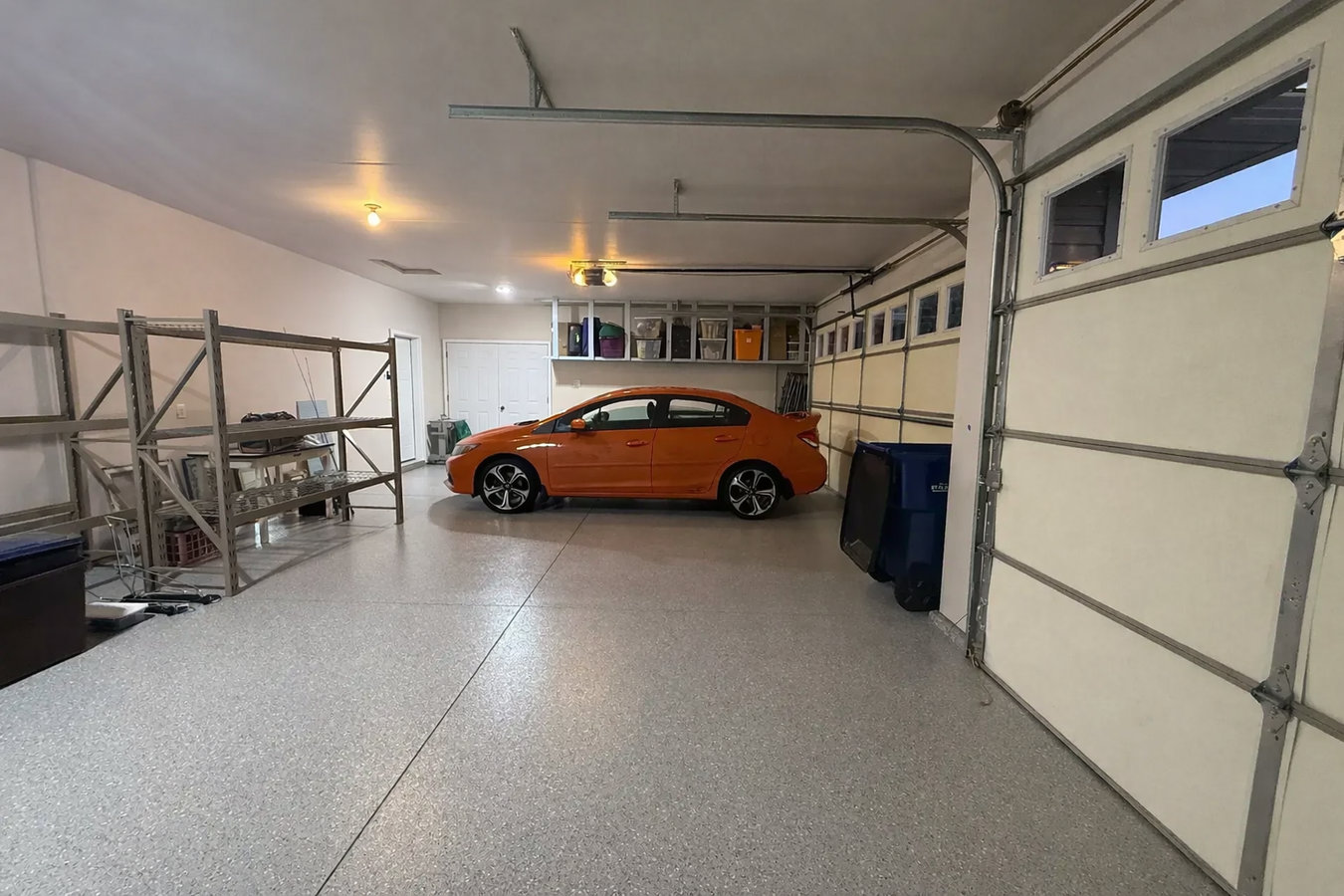
Cracked or crumbling garage slab? We replace it right - with proper base prep for Hobbs soils and a pour timed around the desert heat.
Garage floor concrete in Hobbs, NM means removing your old slab, preparing the ground underneath, and pouring a fresh 4-inch slab that is smoothed and finished flat. Most jobs take one to two days of active work, with a 7-day wait before you can park on it and 28 days to full strength.
A lot of Hobbs homes were built during the oil boom years of the 1950s through 1970s. Those original slabs are now 40 to 70 years old - well past the typical lifespan of a residential concrete floor. If yours has been patched two or three times and the cracks keep coming back, a full replacement is usually the smarter move. If you are also thinking about what the floor looks like, we offer decorative concrete options that can give the finished surface real visual appeal.
The ground underneath your slab matters just as much as the concrete itself. In Hobbs and Lea County, the mix of sandy soil and caliche can hide soft spots and voids that cause a new slab to fail if they are not addressed first. We check and prepare the base before a single bucket of concrete is poured.
Straight lines cut into the floor are intentional control joints. But diagonal or jagged cracks running across the middle of the slab mean the concrete has shifted or settled unevenly. In Hobbs, this often happens because the sandy or caliche soil underneath has moved over time, and patching alone will not fix the underlying problem.
If your garage floor leaves a fine gray powder on your broom, the top layer of the concrete is breaking down. This is called spalling, and it usually means the original slab was poured during hot weather without proper curing - a common issue in Hobbs given the climate. Once the surface starts flaking, it tends to get worse quickly and cannot be fixed with a simple coating.
A properly poured garage floor slopes slightly toward the door so water drains out. If you notice puddles sitting in the middle or corners after rain or washing the floor, the slab has settled unevenly or was never poured with the right slope. Standing water accelerates deterioration and can seep under the slab, making the soil problem worse over time.
If tapping the floor with your heel produces a dull, hollow sound in spots, the concrete has separated from the soil underneath - a condition called voiding or delamination. This is a structural concern, not just cosmetic, and it means the slab could crack or collapse under the weight of a vehicle. A contractor needs to assess this before the damage spreads.
We handle the full job from start to finish - slab demolition and removal, base compaction, the pour itself, and final finishing. Whether you need a straightforward replacement for a standard two-car garage or a more involved project that includes drainage corrections or an upgraded finish, we size the work to what your specific garage actually needs. Customers who want something beyond plain gray often pair their garage floor with our concrete floor installation service, which covers interior slabs and specialty finishes throughout the home.
After the new slab cures, you can also add a sealer or textured finish to protect against oil stains and reduce slipping when the floor gets wet. These are optional add-ons, but they extend the life of the concrete and are worth discussing when you get your estimate.
Best for floors with diagonal cracking, settled sections, or repeated patch failures - when the base needs to be reset entirely.
Suits homeowners who want the durability of a new slab with a surface that looks better than plain gray - sealed, colored, or textured.
Ideal when your current floor pools water because the pour was flat or the slab has settled unevenly over time.
Good for any new floor where you want protection against oil stains, dust, and surface wear from day one.
Hobbs sits on high desert plains where summer temperatures regularly top 95 degrees and afternoons can push past 100 from June through August. Concrete poured in that kind of heat dries too fast on the surface, which causes cracking and weakening before the slab has a chance to cure properly. We schedule pours for early morning, use techniques to slow the drying process, and avoid pouring on the hottest days of summer. Homeowners in Seminole, TX face similar desert heat conditions, and we bring the same scheduling discipline to every project across our service area.
The soil underneath Hobbs homes is another factor that sets local work apart. Lea County soils are a mix of loose sand and caliche - a hard, chalky mineral layer that can be rock-solid in one spot and soft or hollow just a few feet away. A contractor who knows this area tests and prepares the base carefully before pouring, which adds time but prevents the new slab from cracking or settling unevenly down the road. We also serve Andrews, TX, where similar Permian Basin soil conditions make proper base prep equally important.
We reply within one business day. You describe the garage, we ask a few questions about the existing floor, and we schedule a time to come look at it in person - no charge for the visit.
We measure the space, check the existing slab and base, and give you a written quote that breaks down demolition, base prep, the pour, and any finishing work. No single lump-sum number with hidden details.
In Hobbs, timing matters more than in most places. We pick a day when temperatures are moderate and wind is calm - ideally a spring or fall morning. Summer work starts early, sometimes before 7 a.m., to beat the afternoon heat.
The crew pours and finishes the slab, cuts control joints, and applies a curing compound to protect the fresh concrete from Hobbs wind and heat. You get a written timeline: when to walk on it, when to park, when you are fully clear.
No obligation. We will assess the slab, explain your options, and give you a written quote before any work begins.
(575) 665-9620Caliche and sandy soils under Hobbs homes can hide soft spots and voids that cause a new slab to fail. We test and compact the base before pouring, so your floor has a stable foundation that does not shift in year two or three.
Hot, dry conditions cause concrete to cure too fast on the surface, leading to cracking. We schedule early-morning pours and use curing compounds to slow moisture loss - the same care recommended by the Portland Cement Association for hot-weather concreting. Portland Cement Association.
One of the most frustrating parts of any home project is not knowing when your life gets back to normal. We give you a clear written schedule: when the crew arrives, when you can walk on it, when you can park, and when the job is fully done.
New Mexico requires concrete contractors to hold a current state license through the Construction Industries Division. We are fully licensed, and you can verify our standing through the New Mexico Regulation and Licensing Department before agreeing to anything.
Every one of these points ties back to the same thing: a garage floor that holds up in Hobbs conditions, not just for the first season. That is what local experience actually buys you.
Add color, texture, or a stamped finish to your new garage floor or any outdoor surface for a result that looks far better than plain gray.
Learn MoreInterior slabs and specialty concrete floors throughout the home, handled with the same base preparation and finishing care as our garage work.
Learn MoreSpring and fall booking slots fill fast - call today to lock in your project date before the heat makes scheduling harder.